Gig Harbor Luxury Waterfront: What Summer 2026 Buyers and Sellers Need to Know
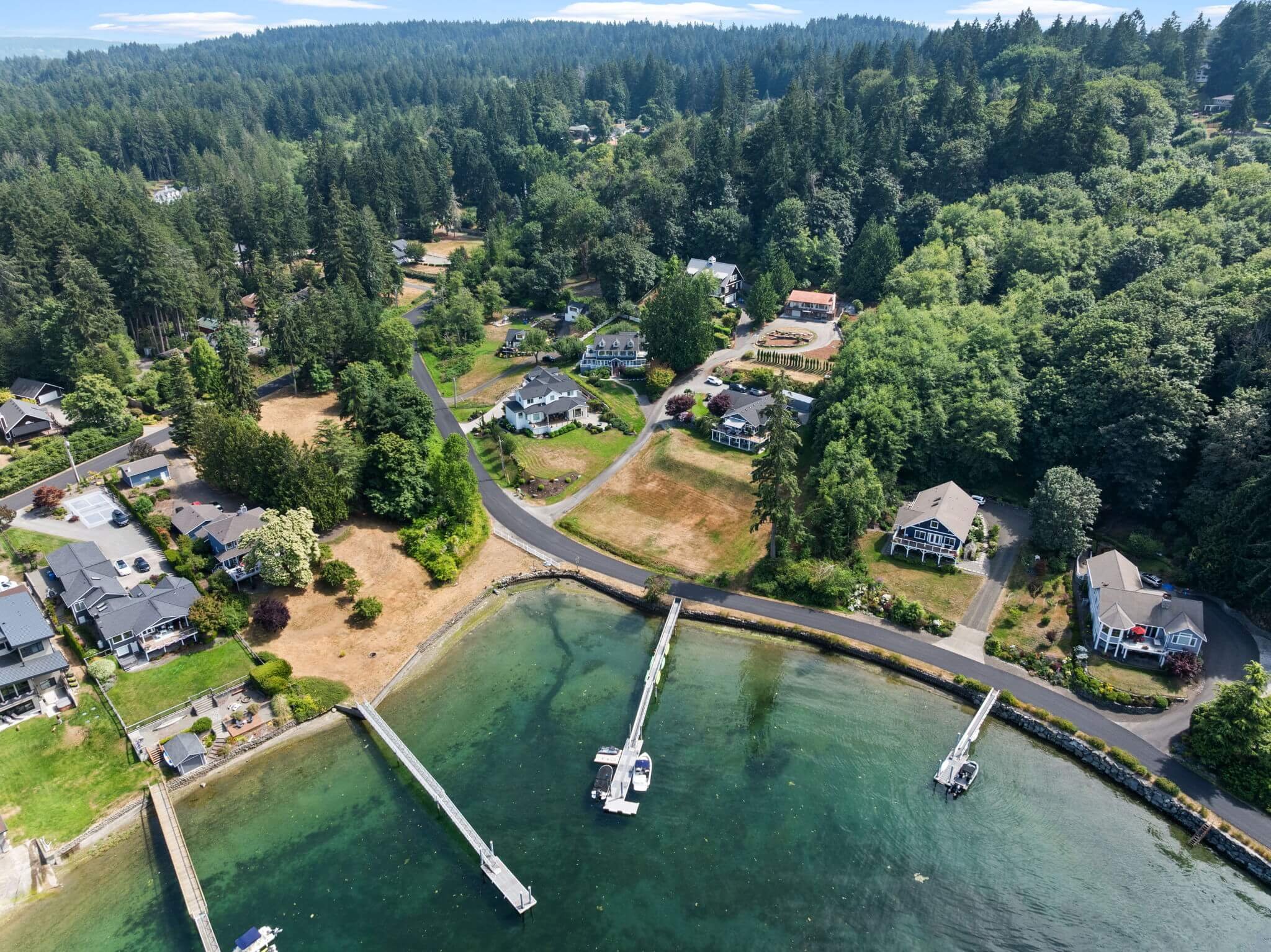
Summer is when Gig Harbor's waterfront market shows its true colors — literally. Long days on the Sound, boats back in the water, and buyers who've been "just looking" all spring finally ready to write offers. If you're considering a move on low bank or medium bank waterfront this season, here's what the current data actually shows, not just the usual seasonal talking points.
As the top-producing real estate agent in the Gig Harbor market per NWMLS production rankings, and an agent who has built a specialty around marketing waterfront property specifically, I track this micro-market closely — because waterfront doesn't behave like the rest of the Gig Harbor housing market. It has its own pricing logic, its own buyer psychology, and right now, its own story to tell.
The Short Version
Closed sales volume is essentially flat year-over-year once you account for one outlier trophy sale in 2025.
Price-per-square-foot is up double digits YOY — buyers are paying more for less square footage, a sign that demand hasn't softened, it's gotten more selective.
Active inventory sits around 6-7 months of supply, which favors buyers more than it did a year ago.
Correctly priced homes are selling in single-digit days, often at or above asking price.
Overpriced homes — especially in the $1.85M–$2.5M medium bank band — are sitting 200+ days and eventually taking real discounts.
If you only remember one thing from this post: in this market, pricing precision matters more than it has in years.The gap between a well-priced waterfront listing and an ambitiously-priced one is now measured in months on market and hundreds of thousands of dollars.
Low Bank vs. Medium Bank: Why the Distinction Actually Matters
Buyers new to Gig Harbor waterfront often lump every shoreline property into one category. It's a mistake that costs both buyers and sellers real money.
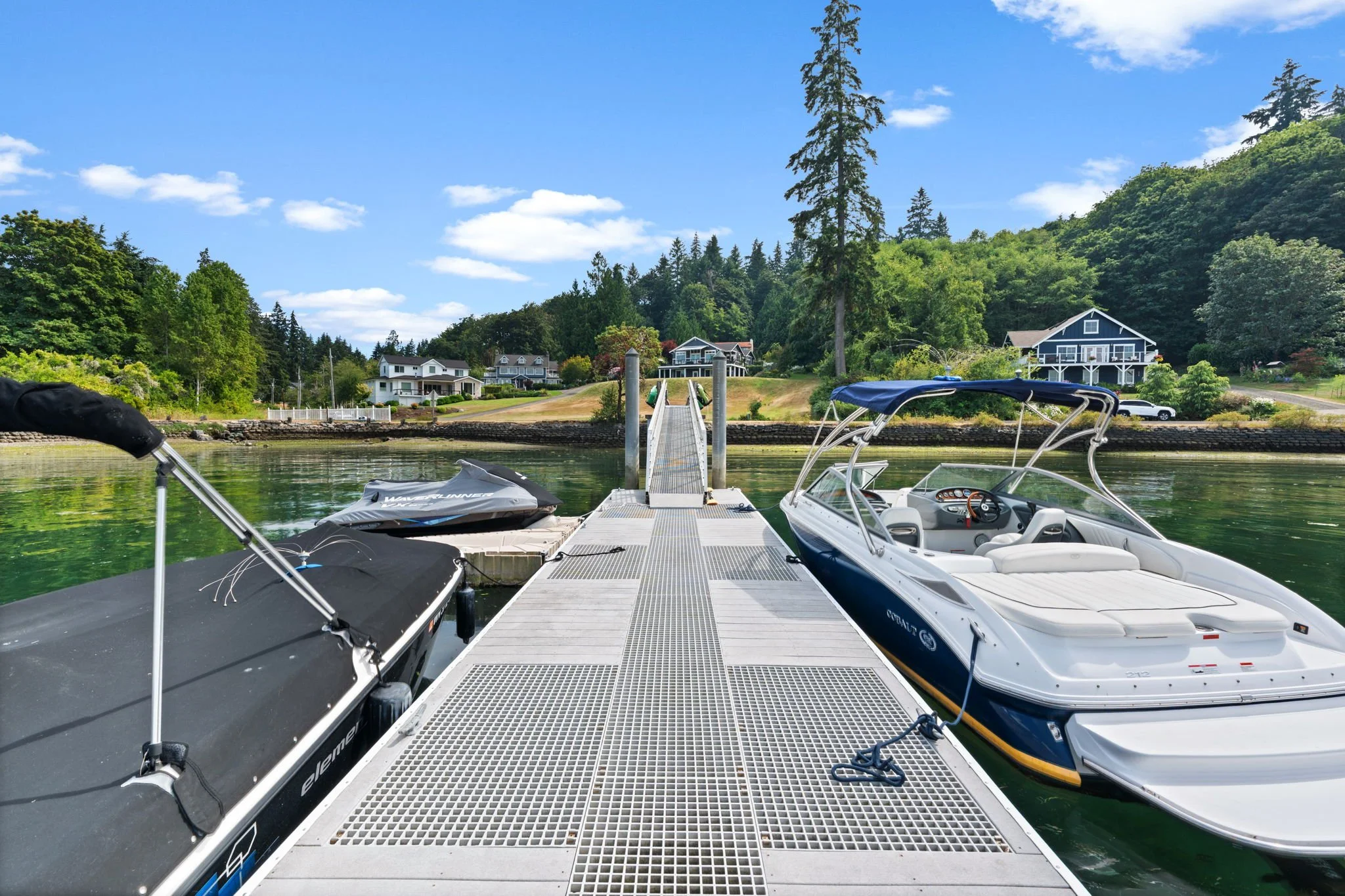
Low bank waterfront means direct or near-direct water access — a short walk or a few steps from your back door to your dock. It's the most emotionally-driven, lifestyle-premium segment of the market, and it commands the widest range of pricing because buyers are paying for feel as much as square footage.
Medium bank waterfront typically involves a staircase, tram, or a longer path down to the beach or dock. You still get the view, the sound frontage, and (often) deeded beach access, but at a meaningfully different price point and buyer profile — frequently upgraders and value-conscious second-home buyers rather than pure lifestyle purchasers.
This summer, low bank inventory is actually showing tighter pricing discipline than medium bank — a reversal of what many agents assume. Low bank sellers are cutting price less often than medium bank sellers, largely because medium bank listings in the $1.85M–$2.5M range have been chronically overpriced relative to what buyers are actually willing to pay.
A quick note on high bank waterfront: you'll notice this report doesn't include high bank properties alongside low and medium bank. That's intentional. High bank homes sit far enough above the water that meaningful access — a private beach, a usable dock, a walk to the water without a serious climb — is often impractical. Practically speaking, high bank waterfront behaves like a view property that happens to touch water, not a true waterfront lifestyle property, so we track and price it against view-home comps rather than against low and medium bank sales.
Where the Action Is: Fox Island, Horsehead Bay, and Wollochet Bay
Three areas are carrying most of this summer's waterfront activity:
Fox Island currently accounts for roughly a third of all active waterfront listings in the medium/low bank category — more competing inventory here than anywhere else in the market. For sellers, that means differentiation (photography, staging, and a sharp listing narrative) matters as much as price. For buyers, it means more selection and more room to negotiate than in tighter pockets of the market.
Horsehead Bay is where the ultra-luxury tier lives, and where the biggest cautionary tales sit — including a property that has been on the market for well over a year at a price point the data simply doesn't support. If you're shopping this area's top tier, patience and a sharp comp analysis will serve you better than urgency.
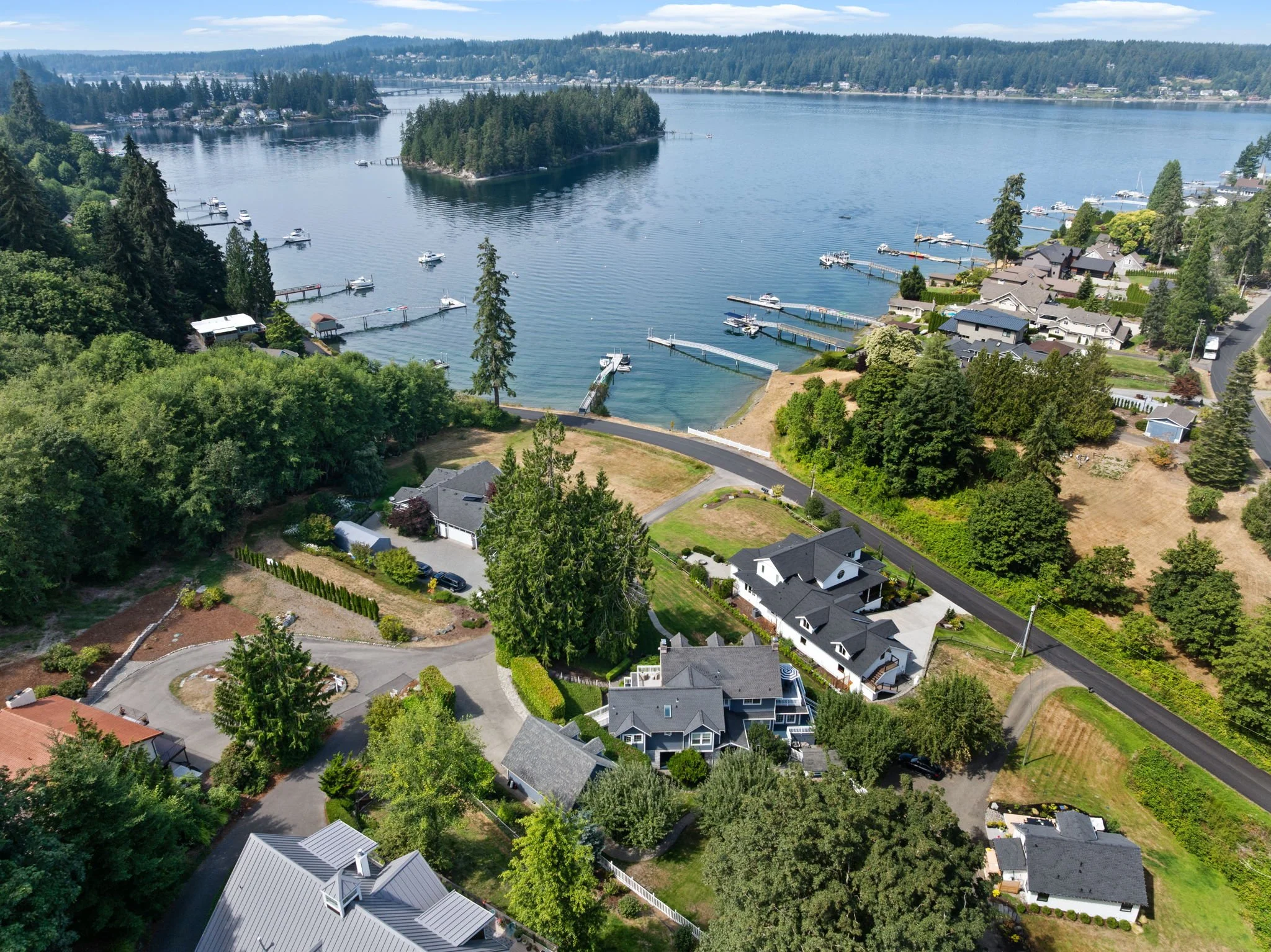
Wollochet Bay and Cromwell have quietly been some of the fastest-moving pockets of the summer — several homes have gone under contract within two weeks of listing, evidence that buyer demand is very much alive when a home is priced to the current market rather than to last year's market.
What's Actually Selling Fast Right Now
The homes closing in under two weeks — several even closing above asking price — share one trait: they were priced to current comparable sales, not to what the seller believed the home was worth eighteen months ago. In a market where roughly a quarter of active listings have already taken a price cut, that discipline is the single biggest differentiator between a smooth, profitable sale and a long, discounted one.
This is the piece sellers most often get wrong going into summer: waterfront doesn't sell itself just because the season is right. The properties commanding full price — and occasionally over asking — are the ones priced against real, current data from the last 60-90 days, not against a neighbor's list price from a year ago.
The Homes That Are Sitting: Condition Is the Other Half of the Story
Pricing isn't the only reason a waterfront home stalls on market this summer — and it's worth calling out separately, because it's a pattern that shows up at every price point, from entry-level cottages to multi-million-dollar estates.
Homes that need substantial work — structurally, cosmetically, or both — are sitting significantly longer than their updated counterparts, regardless of list price. A dated 1920s-era in-town estate listed well into eight figures has spent well over a year and a half on market. A modest, original-condition 1940s cottage on a large lot needed a real price cut before it found a buyer. A 1970s-era home with clear deferred maintenance sold only after a meaningful discount, despite a genuinely desirable location and view.
The throughline is the same at every price tier: buyers today want turnkey. Even in a market with real lifestyle appeal and water frontage, very few buyers — especially in the upper price bands — want to take on the time, cost, and uncertainty of a structural or full cosmetic remodel as a condition of getting the location they want. That's true whether the "remodel" is a $150K kitchen-and-bath refresh or a seven-figure structural overhaul on an aging estate.
This has direct implications for both sides of a transaction:
Sellers with a dated property should expect the market to price in the cost of updating — often more aggressively than the actual renovation estimate would suggest, because buyers also price in the hassle, the time, and the uncertainty of scope. A pre-listing conversation about strategic, targeted updates (not a full remodel) can meaningfully shorten time on market and narrow the discount a buyer will push for.
Buyers willing to take on a fixer have real leverage right now. The properties needing work are sitting the longest and taking the steepest discounts from list price across this entire dataset — this is where a patient, project-ready buyer can secure genuine waterfront frontage below what a turnkey comp would cost.
For Buyers: Where the Leverage Is This Summer
If you're house-hunting waterfront in Gig Harbor this summer, here's where you have real negotiating room:
Anything sitting on market past 90 days is a legitimate negotiation opportunity, especially in the medium bank $1.85M–$2.5M range, where several listings have gone six-plus months without a serious price correction.
Entry-tier waterfront under $1.5M has shown the steepest average discounts from list to sale price this year — sellers here have been the least realistic about pricing relative to buyer appetite.
Ultra-luxury ($4M+) is thin on both sides — fewer listings, fewer buyers — which means serious offers on well-priced trophy properties can still move quickly, but overpriced ones can sit for years.
Homes needing structural or cosmetic updating are sitting longest and discounting hardest across every price tier — from entry-level cottages to multi-million-dollar estates. If you're willing to take on a renovation, this is where the real value gap between list price and true market value is widest right now.
For Sellers: What the Data Says About Pricing This Summer
Sellers should walk into this market with a clear-eyed view: sale-to-list ratios have softened modestly compared to a year ago, meaning buyers are negotiating slightly harder than they were last summer. That's not a reason to panic — it's a reason to price with precision from day one.
The homes achieving full price or better this year all share a pattern: tight, current comps; realistic initial pricing; and strong photography and marketing from the first day on market. The homes taking the steepest discounts almost universally started too high and either corrected too late or never corrected at all.
If you're weighing whether to list this summer, the honest answer is: the market rewards sellers who price against this quarter's data, not last year's headlines — and it's unforgiving to those who don't.
Bottom Line
Gig Harbor's low and medium bank waterfront market this summer isn't soft — it's selective. Buyers are still there, still competitive, and still willing to move fast and pay full price for the right property at the right price. The properties struggling are almost always a pricing story, not a demand story.
Whether you're buying your first waterfront home on Fox Island or preparing to list a family property on Horsehead Bay, the difference between a strong result and a frustrating one this summer comes down to working with current, hyperlocal data — not general Gig Harbor market assumptions.
Ready to talk specifics about your waterfront property or your search? As Gig Harbor's top-producing agent per NWMLS and a specialist exclusively focused on waterfront marketing and positioning, I can walk you through the exact comps, absorption data, and pricing strategy for your property or target neighborhood.
Frequently Asked Questions
(Format as an FAQ block/schema on Squarespace for search and AI-assistant visibility)
What's the difference between low bank and medium bank waterfront in Gig Harbor? Low bank waterfront offers direct or near-direct access to the water, often just steps from the home to a private dock or beach. Medium bank waterfront requires a longer path down — typically stairs or a tram — to reach the shoreline, and generally trades at a different price point than low bank properties with comparable square footage.
Is now a good time to buy waterfront property in Gig Harbor? Current inventory levels favor buyers more than they did a year ago, with several months of supply on the market and roughly a quarter of active listings already showing price reductions. Well-priced properties still move quickly, but overpriced listings are sitting significantly longer than in previous summers, creating negotiating opportunities for prepared buyers.
Which Gig Harbor neighborhoods have the most waterfront homes for sale right now? Fox Island currently has the largest concentration of active low and medium bank waterfront listings, followed by the Horsehead Bay and Wollochet Bay/Cromwell areas.
How long do waterfront homes typically stay on the market in Gig Harbor? It varies significantly by pricing accuracy. Correctly priced homes are selling in under two weeks, sometimes in single digits. Homes priced above what recent comparable sales support have stayed on market for six months or longer.
Are Gig Harbor waterfront home prices going up or down? Overall sales volume has stayed roughly flat year-over-year, but price-per-square-foot has increased, suggesting steady-to-strong demand for the right properties even as the very top of the market (ultra-luxury, $4M+) has thinned.
Do dated or fixer-upper waterfront homes sell in Gig Harbor? Yes, but they typically take longer to sell and close at a meaningfully steeper discount from list price than updated, turnkey homes — a pattern that holds true across every price point, from entry-level cottages to multi-million-dollar estates. Most buyers, even at the luxury level, prefer to avoid taking on a structural or full cosmetic remodel and will price that risk into their offer.
Is high bank waterfront the same as low bank or medium bank in Gig Harbor? No. High bank properties sit high enough above the water that direct access — a usable private beach or dock — is often impractical. These homes are typically valued and compared against view-home sales rather than true low bank or medium bank waterfront sales, since the water-access lifestyle premium doesn't apply in the same way.

About Paige Schulte
Paige Schulte is the founder of Schulte & Co. and a top-producing Realtor based in Gig Harbor, Washington. She’s known for her deep market insight, client-first approach, and community-driven real estate leadership across the South Sound. Learn more or get in touch to work with Paige.